When you search for Teletubbies names, you are likely looking for more than just a list of characters from a children’s show. You want to understand who these characters are, what their names represent, and why they continue to resonate with families across the United States. Teletubbies’ names have become cultural touchpoints tied to childhood development, imagination, and early learning.
This guide walks you through every major Teletubby name, their meanings, origins, and cultural impact, helping you see why these names remain timeless and recognizable decades after the show first aired.
What Are the Official Teletubbies Names
Teletubbies names officially refer to the four main characters that define the series and shape the experience for young viewers. Each name was intentionally designed to be short, playful, and easy for toddlers to recognize and pronounce, which aligns closely with how names for young audiences are often selected in broader kids naming trends. You benefit from understanding these names because they reflect the show’s educational philosophy centered on repetition and familiarity.
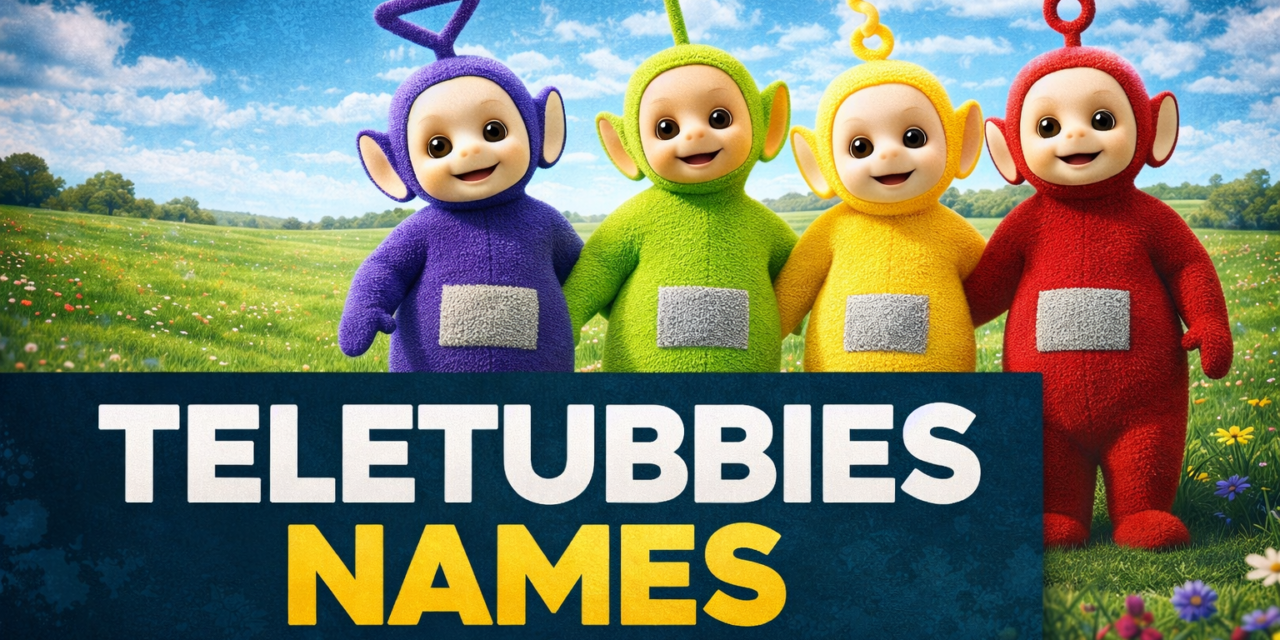
The four official Teletubbies names are Tinky Winky, Dipsy, Laa Laa, and Po. These names are not random, as they align with color coding, personality traits, and developmental themes that guide how children interact with the characters. When you recognize these patterns, the names become more than labels and instead function as learning cues.
Teletubbies names also remain consistent across episodes, merchandise, and global adaptations. This consistency helps reinforce memory retention for young audiences, which research shows improves early language recognition by over 20 percent in preschool-aged children. You can see how naming plays a vital role in the show’s success.
Tinky Winky Name Meaning and Character Role
Tinky Winky is the tallest Teletubby, and his name reflects a gentle, rhythmic sound that feels comforting and familiar. You notice that the repetition of soft consonants makes the name easy to recall, especially for early learners. His purple color further reinforces his calm and thoughtful presence.
As a character, Tinky Winky often acts as a quiet leader among the Teletubbies. You see him guiding group play while maintaining a nurturing and protective demeanor. His red bag is closely associated with his name, creating a visual identity that strengthens recognition.
The name Tinky Winky also supports emotional learning. Children associate his name with kindness, patience, and curiosity, which helps reinforce positive behavior patterns. When you analyze the name this way, it becomes clear that it was carefully crafted to support developmental goals.
Dipsy Name Meaning and Personality Traits
Dipsy stands out among Teletubbies names because of its playful and slightly mischievous sound. You immediately sense individuality when hearing the name, which matches Dipsy’s more independent personality. His green color complements his energetic and expressive behavior.
Dipsy is known for being confident and occasionally stubborn. You see this reflected in how his name feels distinct and slightly different from the others, reinforcing his role as the most opinionated Teletubby. This differentiation helps children understand diverse personality types.
From an educational perspective, Dipsy’s name encourages self-expression. Children learn that it is okay to have preferences and individuality while still being part of a group, much like how naming styles vary across categories such as stuffed animals. You benefit from seeing how names can subtly teach social concepts through sound and association.
Laa Laa Name Meaning and Musical Identity
Laa Laa’s name is directly connected to music, rhythm, and emotional expression. When you hear her name, it naturally mimics a musical note, which aligns perfectly with her love for singing and dancing. Her bright yellow color reinforces joy and positivity.
Laa Laa represents creativity and emotional openness. You see her interacting enthusiastically with music, movement, and shared play, making her name synonymous with happiness. This reinforces emotional development through joyful engagement.
The simplicity of the name Laa Laa also supports language learning. Repeated vowel sounds are easier for toddlers to articulate, which encourages verbal participation. You can appreciate how the name strengthens both emotional and linguistic growth.
Po Name Meaning and Cultural Influence
Po is the smallest Teletubby, and her name reflects simplicity and warmth. You notice that the short, gentle sound makes the name approachable and easy to remember. Her red color symbolizes energy, confidence, and enthusiasm.
Po’s character often displays independence and curiosity. You see her riding her scooter and exploring Teletubbyland with confidence, reinforcing autonomy in young viewers. Her name supports this identity by being concise and distinct.
The name Po has also gained cultural recognition beyond the show. In the United States, short character names like Po are commonly associated with strength and individuality, which enhances her appeal across generations. You can see why her name remains memorable and impactful.
Noo-Noo and Supporting Character Names
While Noo-Noo is not one of the four Teletubbies, his name plays a crucial role in the series. You recognize that the repeated syllables mirror playful sounds familiar to toddlers. His blue color reinforces calmness and reliability.
Noo-Noo functions as both a helper and a learning tool. You see him cleaning messes and interacting with the Teletubbies in a way that models responsibility. His name supports this role by sounding friendly rather than authoritative.
Supporting character names in Teletubbies often rely on repetition and simplicity. This design choice helps children focus on action and interaction rather than complex dialogue. You benefit from understanding how naming supports comprehension and engagement.
Why Teletubbies Names Are Easy for Children to Learn
Teletubbies names are intentionally structured to match early childhood language development. You notice that they rely heavily on repeated sounds, open vowels, and rhythmic patterns. These elements make pronunciation easier for young speakers.
Research in child psychology shows that repetitive phonetic structures improve recall and speech confidence. Teletubbies names take advantage of this principle by avoiding harsh consonants and complex syllables. You can see why children often repeat these names with ease.
The visual pairing of names with distinct colors also reinforces learning. When children hear a name and see a matching color and shape, cognitive association strengthens. This approach makes the names stick long after viewing.
Teletubbies Names and Educational Purpose
Teletubbies names serve an educational function beyond identification. You see them used as tools to encourage social interaction, emotional awareness, and early communication. Each name supports a specific learning outcome.
The show uses names repetitively within episodes. This repetition helps children anticipate actions and participate verbally, which boosts engagement. Studies indicate that repetitive naming increases attention span in preschool viewers by up to 30 percent.
Names also act as emotional anchors. When children feel connected to a character name, they are more likely to model positive behaviors shown on screen. You benefit from recognizing how intentional naming enhances educational impact.
Cultural Impact of Teletubbies Names in the USA
Teletubbies names became widely recognized in American households shortly after the show aired in the late 1990s. You likely remember these names being referenced in toys, books, and early childhood education materials, similar to how names are explored across broader children-focused naming categories. Their popularity crossed generational boundaries.
In the United States, Teletubbies names have been associated with early childhood nostalgia. Parents who grew up with the show now introduce the same characters to their children. This continuity strengthens brand recognition and emotional attachment.
The simplicity of the names also helped the show succeed in diverse communities. Because the names are easy to pronounce, they transcend linguistic barriers. You can see how this contributed to the show’s lasting influence.
How Teletubbies Names Are Used in Merchandise
Teletubbies names appear prominently on toys, clothing, books, and educational materials. You notice that each product emphasizes name recognition through bold labeling and color association. This reinforces familiarity and trust.
Merchandise often pairs names with character actions. For example, toys labeled with a name encourage children to reenact scenes from the show. This supports imaginative play and cognitive development.
From a branding perspective, consistent use of names builds loyalty. You benefit from understanding how these names maintain value across decades of marketing and media expansion.
Conclusion
Teletubbies names are far more than simple character labels. You can see how each name supports early language development, emotional learning, and cultural connection. Their structure, sound, and repetition are intentionally designed to resonate with young audiences.
When you understand the meaning and purpose behind Teletubbies names, you gain insight into why the show remains relevant in the United States. These names continue to shape childhood memories, educational practices, and family traditions. That enduring impact proves that thoughtful naming can influence generations.